20 Best Anime With Complete Stories and Satisfying Endings
By Mika Aoyama
You know the feeling. You finish an incredible anime, rush to look up the next season, and discover the adaptation stopped halfway through the manga. Maybe the source material is still running. Maybe the studio moved on. Maybe the last episode was basically a 24-minute advertisement for a story you'll never see animated.
Sometimes you just want an anime with a beginning, a middle, and an actual ending.
That's what this list is for. These 20 series deliver complete central stories and finales worth reaching. Some end triumphantly. Others will absolutely ruin your evening in the best possible way. But none require you to read ten more manga volumes just to learn how the main story concludes.
Spoiler policy: This guide explains why each ending is satisfying without revealing major twists, deaths, romantic outcomes, or final scenes.
What Counts as a Complete Anime?
A show being marked finished airing doesn't necessarily mean its story is finished. For this list, we're looking for one of three things: an anime-original story that reaches its intended conclusion, an adaptation that covers the source's central ending, or a series with a clearly identified finale film that completes the journey.
We're also judging satisfaction, not just technical completion. A finale can be tragic, bittersweet, or deliberately reflective and still feel earned. A happy ending, meanwhile, doesn't automatically make a good one.
If you want a recommendation right now, here are our fastest answers:
| What you're looking for | Start with | Commitment |
|---|---|---|
| Best all-around complete anime | Fullmetal Alchemist: Brotherhood | 64 episodes |
| Best mind-bending thriller | Steins;Gate | 24 episodes |
| Best romance and emotional closure | Fruits Basket (2019) | 63 episodes |
| Best short mystery | Astra Lost in Space | 12 episodes |
| Best uplifting character journey | Mob Psycho 100 | 37 episodes |
| Best one-season fantasy thriller | Summer Time Rendering | 25 episodes |
Now for the full countdown.
20. Ping Pong the Animation
Episodes: 11 | Genres: Sports, Drama, Coming-of-Age
A table-tennis anime might sound like an unlikely place to find one of the medium's sharpest endings. Then you meet Smile and Peco, childhood friends whose relationships with competition, talent, and one another are far more complicated than winning a tournament.
Ping Pong the Animation looks rough and unconventional on purpose. Beneath that loose, expressive art style is an exceptionally precise character study. Every major rival matters, and the story refuses to treat defeat as proof that someone's life is over.
Why the ending works: It follows its characters beyond a simple win-or-lose sports climax and gives their ambitions genuine perspective. Eleven episodes, no sequel homework, and a remarkable amount of closure.
19. Astra Lost in Space
Episodes: 12 (including extended episodes) | Genres: Science Fiction, Mystery, Adventure
A group of students is stranded thousands of light-years from home. Their only chance is a mysterious abandoned spacecraft, a series of dangerous planetary stops, and the uncomfortable realization that their predicament may not be an accident.
Astra Lost in Space initially feels like an entertaining survival adventure. Then the clues begin connecting, and suddenly every earlier conversation seems worth reconsidering. Its short runtime is deceptive: this is a carefully constructed mystery with a destination in mind.
Why the ending works: It answers the central questions, resolves the crew's journey, and makes time for the aftermath. If you're looking for a complete anime to binge in a weekend, put this near the top.
18. A Place Further Than the Universe
Episodes: 13 | Genres: Adventure, Slice of Life, Drama
Four girls set their sights on Antarctica, a goal that sounds ridiculous until their determination becomes contagious. What follows is less about sightseeing than about grief, friendship, missed opportunities, and the courage to do something before life passes you by.
This original anime has no sprawling mythology to untangle and no villain to defeat. Instead, its emotional stakes emerge from ordinary insecurities that feel painfully familiar. By the time the expedition reaches its destination, the characters have already traveled much farther internally.
Why the ending works: The series knows exactly what each girl needs from the journey and gives those arcs space to land. It is warm, cathartic, and wonderfully self-contained.
17. Parasyte: The Maxim
Episodes: 24 | Genres: Horror, Action, Science Fiction
After an alien parasite fails to take control of his brain, high-school student Shinichi Izumi is forced into an uneasy partnership with the creature living in his right hand. Worse, other parasites are successfully blending into human society.
The violence is intense, but Parasyte is ultimately interested in more than body horror. What separates humans from monsters? What happens when survival begins to erase empathy? And can two incompatible forms of life ever understand each other?
Why the ending works: The anime adapts the manga's complete central narrative and brings its biggest questions back to the characters rather than simply escalating the body count.
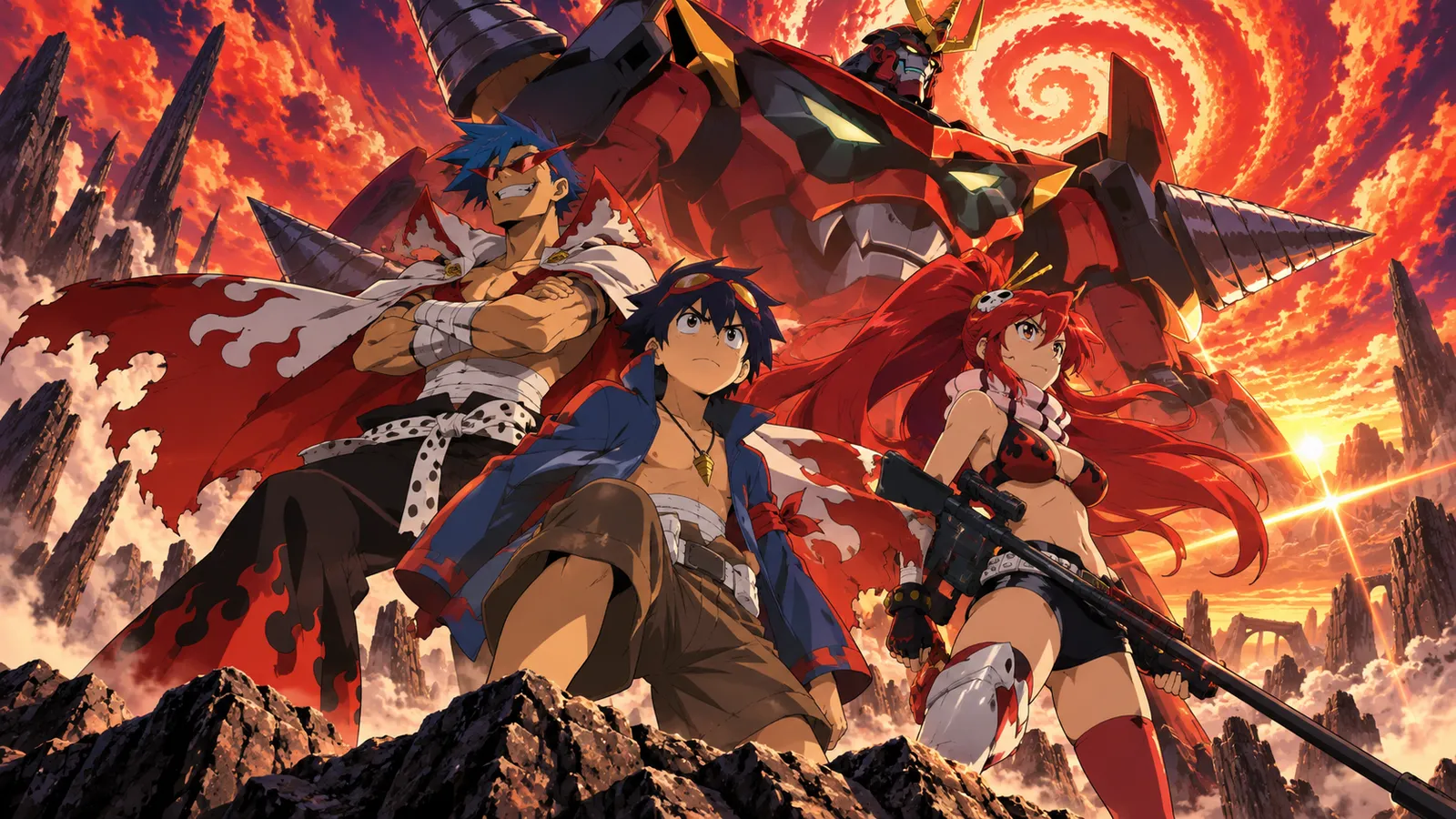
16. Gurren Lagann
Episodes: 27 | Genres: Mecha, Action, Adventure
If your preferred anime endings involve impossible odds, gigantic robots, and emotions so intense they might punch through the universe, this is your show.
Gurren Lagann begins underground, with Simon and Kamina dreaming of a world beyond their village. From there, its scale expands almost absurdly, yet the real story remains rooted in growing up, accepting loss, and deciding what kind of future to build.
Why the ending works: Beneath all the spectacular escalation is a surprisingly coherent coming-of-age arc. The final stretch earns both its enormous spectacle and its quieter emotional choices. The 27-episode TV series stands on its own; the compilation films are optional alternate presentations.
15. Death Note
Episodes: 37 | Genres: Psychological Thriller, Crime, Supernatural
Light Yagami discovers a notebook capable of killing anyone whose name is written inside it. What begins as a fantasy of punishing criminals becomes a battle of intellect, ego, and increasingly questionable morality.
Few anime are as effective at making a conversation feel like a life-or-death duel. Light and his pursuers keep finding new ways to turn information into a weapon, while the series asks whether absolute power can ever produce justice.
Why the ending works: Although fans debate the direction of its later episodes, Death Note reaches a definitive conclusion to its central conflict. It doesn't evade the moral questions that made the story compelling in the first place.
14. Violet Evergarden
Watch: 13-episode TV series, then Violet Evergarden: The Movie (2020) | Genres: Drama, Fantasy, Slice of Life
Violet is a former child soldier trying to understand an emotion she has never learned to express. She becomes a professional letter writer, helping strangers communicate feelings they cannot put into words themselves.
Every assignment reveals something about love, regret, and human connection. Kyoto Animation turns even the smallest gestures into moments of enormous emotional weight, while Violet gradually develops a life beyond the battlefield.
Why the ending works: The TV series is a strong emotional experience on its own, but the 2020 film is the true final chapter of Violet's personal story. Don't mistake the side-story film Eternity and the Auto Memory Doll for that finale. For a complete watch, finish the TV series and then the 2020 movie.
13. Pluto
Episodes: 8 extended episodes | Genres: Science Fiction, Mystery, Psychological Drama
In a world where humans and robots coexist, a series of murders points toward a terrifying connection between some of the planet's most advanced artificial beings. Detective Gesicht begins investigating, but every answer leads to a deeper question about memory, war, and what makes someone human.
Adapted from Naoki Urasawa's manga, Pluto takes a familiar science-fiction premise and makes it feel intimate, mournful, and unsettling. Its eight episodes are much longer than standard anime installments, giving its sprawling cast room to breathe.
Why the ending works: The anime tells the full central story rather than stopping at a convenient season break. Its final message feels inseparable from everything the mystery has been building toward.
12. Samurai Champloo
Episodes: 26 | Genres: Action, Historical Fiction, Adventure
A wandering swordsman, a disciplined ronin, and a determined young woman travel across Edo-period Japan in search of a mysterious samurai. Their personalities clash constantly, their plans rarely work, and the journey somehow becomes unforgettable.
Director Shinichiro Watanabe pairs sword fights with hip-hop rhythms and an episodic road-trip structure. Some detours are hilarious. Others are unexpectedly melancholy. All of them help define a trio of people who never planned to become important to each other.
Why the ending works: The central journey comes to a proper conclusion without pretending every relationship needs a neat bow. It's closure that feels true to the series' restless spirit.
11. Your Lie in April
Episodes: 22 | Genres: Romance, Music, Drama
Once a gifted child pianist, Kosei Arima loses the ability to connect with his music after a traumatic experience. Meeting the fiercely expressive violinist Kaori Miyazono pulls him back toward the stage—and toward emotions he has spent years avoiding.
Music is more than background here. Performances become arguments, confessions, and attempts to reach people who cannot be reached through ordinary words. The result is one of anime's most memorable coming-of-age romances.
Why the ending works: The finale reframes the journey without abandoning its themes of grief, inspiration, and self-expression. It is a complete story, though definitely not a recommendation for viewers seeking a guaranteed cheerful ending.
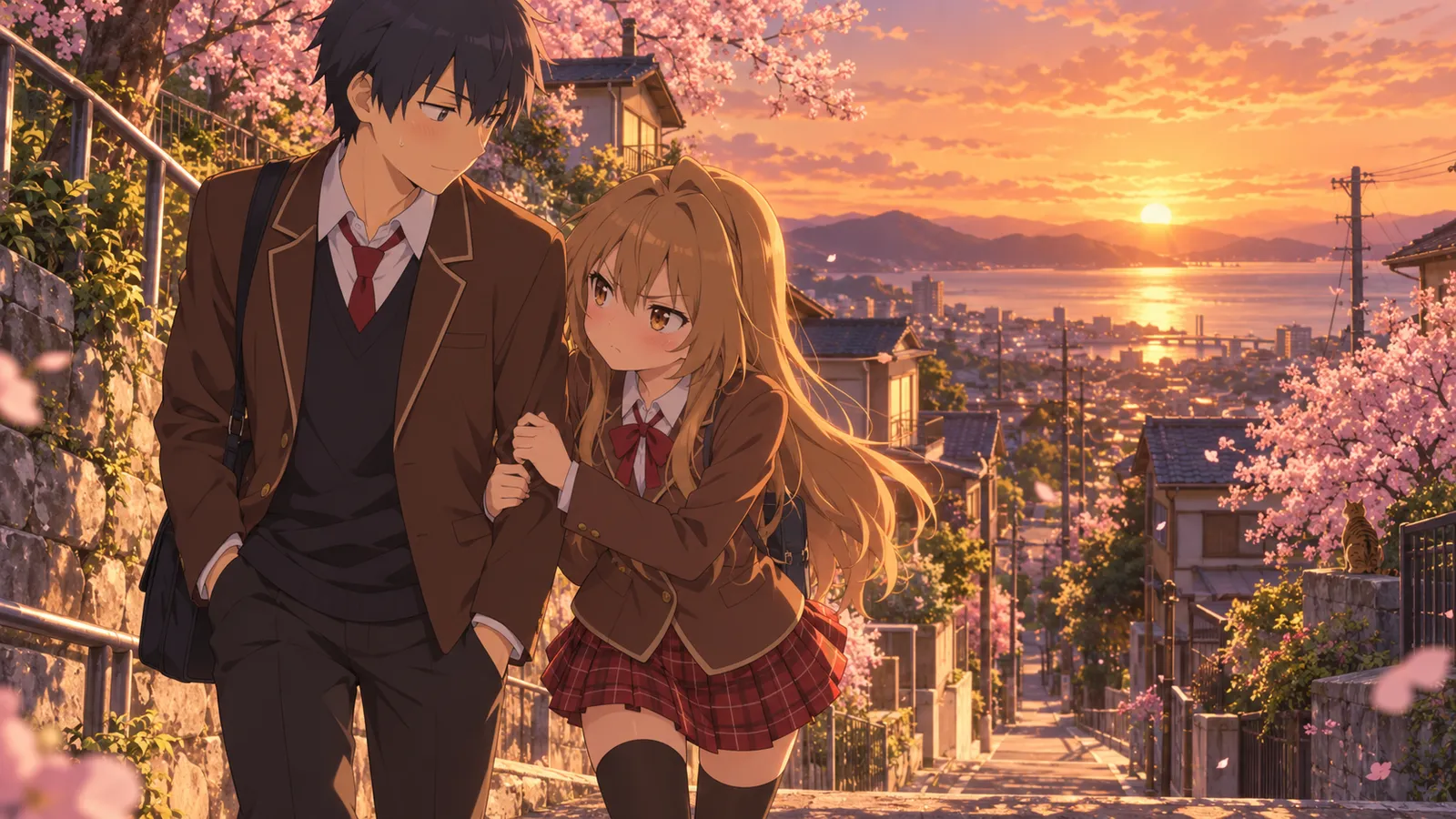
10. Toradora!
Episodes: 25 | Genres: Romantic Comedy, Drama, School
Ryuji looks intimidating but is thoughtful and domestic; Taiga looks harmless but has a legendary temper. When they discover that each has a crush on the other's best friend, they form an alliance that is almost guaranteed to go wrong.
What separates Toradora! from an ordinary school rom-com is its willingness to let youthful feelings become genuinely messy. Attraction isn't always convenient, growing up isn't always graceful, and people can hurt each other without being villains.
Why the ending works: The romance reaches a real resolution rather than ending the moment someone finally admits a feeling. Watch all the way through the final episode's credits before deciding you've seen the ending.
9. Cowboy Bebop
Episodes: 26 | Genres: Science Fiction, Neo-Noir, Action
Spike Spiegel and the crew of the Bebop drift from bounty to bounty across a beautifully worn-out solar system. On the surface, it's a collection of stylish adventures powered by jazz, sharp dialogue, and spectacular animation. Underneath, it's a story about people who cannot fully escape their pasts.
The episodic structure means not every secondary mystery gets a detailed explanation. That's part of the point: Cowboy Bebop is more interested in the emotional weight people carry than in building a franchise-sized mythology.
Why the ending works: It delivers a decisive conclusion to the series' defining character arc. Bittersweet and open to interpretation in places, yes—but not an adaptation abandoned before its conclusion.
8. Summer Time Rendering
Episodes: 25 | Genres: Mystery, Supernatural, Thriller
Shinpei returns to his island hometown for a childhood friend's funeral. Disturbing inconsistencies quickly suggest something far stranger is happening, and a deadly mystery begins unfolding around the people he thought he knew.
It's difficult to describe the show's cleverest ideas without spoiling them. What matters is that the story treats its supernatural rules seriously, turns small clues into major revelations, and keeps evolving without losing sight of its emotional core.
Why the ending works: All 25 episodes carry the mystery to its central conclusion, adapting the manga's full main storyline. This is the sort of intricately plotted thriller that rewards paying attention from episode one.
7. Monster
Episodes: 74 | Genres: Psychological Thriller, Crime, Drama
Dr. Kenzo Tenma saves a young boy's life, only to discover years later that his decision may have unleashed something horrifying. His attempt to understand and confront the consequences takes him across Europe and through a network of damaged lives.
Monster is a slow burn, and that's a compliment. It builds dread through conversations and moral dilemmas rather than supernatural powers or constant action. Its supporting characters feel like people with entire lives outside the main plot.
Why the ending works: The adaptation reaches the manga's ending and brings Tenma's moral struggle full circle. Some of its final implications invite debate, but ambiguity of meaning isn't the same thing as an unfinished story.
6. Assassination Classroom
Episodes: 47 across two seasons | Genres: Comedy, Action, School Drama
Class 3-E receives an unusual assignment: assassinate the seemingly invincible creature who has become their teacher before he destroys Earth. Inconveniently, he's also the most encouraging educator they've ever met.
The premise is ridiculous. The feelings are not. As the students grow more capable and confident, the comedy gradually reveals a story about mentorship, potential, and how profoundly a teacher can influence a life.
Why the ending works: The anime follows its premise through to a definite finish and gives the class a meaningful farewell. There is no need to switch to the manga to find out how the central mission ends.
5. Mob Psycho 100
Episodes: 37 across three seasons | Genres: Supernatural, Action, Comedy, Coming-of-Age
Shigeo "Mob" Kageyama might be one of the strongest psychics alive. Unfortunately, supernatural power does nothing to solve the problems he actually cares about: making friends, understanding his emotions, and becoming someone he respects.
The animation is spectacular, the comedy is consistently strange, and the supporting cast—including the unforgettable Reigen—grows in ways few action shows would bother attempting.
Why the ending works: The third season completes Mob's coming-of-age story. Crucially, the resolution is about self-acceptance rather than finding an even stronger enemy to punch. Few anime understand their own protagonist quite this well.
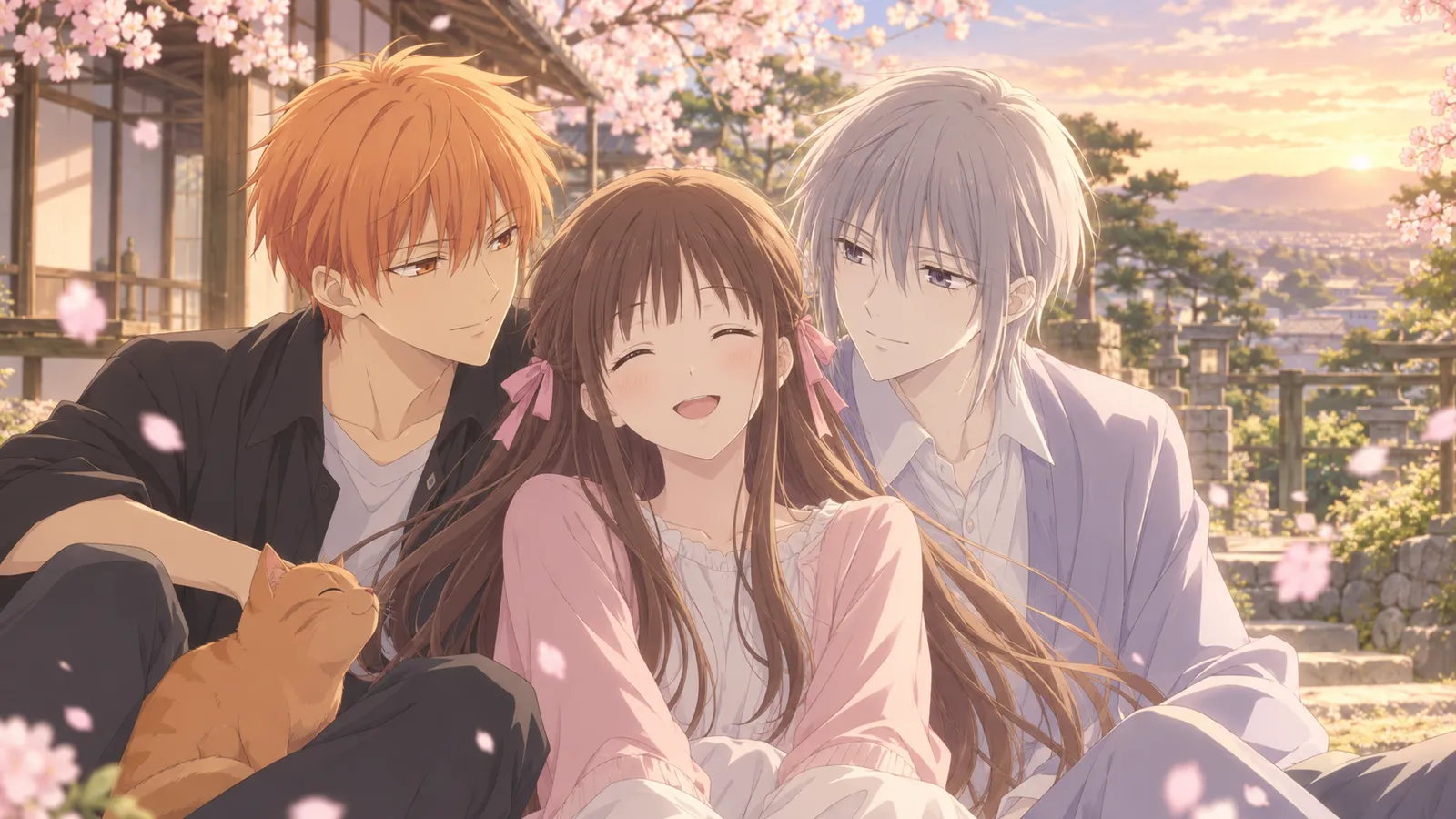
4. Fruits Basket (2019)
Episodes: 63 across three seasons | Genres: Romance, Drama, Supernatural
After a family tragedy, kindhearted Tohru Honda becomes involved with the mysterious Sohma family, whose members carry a supernatural curse. What first appears to be a gentle romantic comedy gradually becomes a deeply affecting story about inherited trauma, belonging, and the courage to change.
Almost every important character is wrestling with something different. Fruits Basket takes the time to show how those wounds shape relationships—and how healing rarely follows a straight line.
Why the ending works: Unlike the 2001 adaptation, the 2019 reboot continues through Fruits Basket: The Final and reaches the manga's ending. Its final season rewards the emotional investment of everything that came before it. For viewers craving romance with genuine closure, this is an essential pick.
3. Code Geass: Lelouch of the Rebellion
Episodes: 50 across Lelouch of the Rebellion and R2 | Genres: Mecha, Political Thriller, Drama
Lelouch, an exiled prince, obtains the power to command another person absolutely. He uses it to challenge a global empire, hiding behind a revolutionary identity while making choices that become more dangerous and morally tangled with every victory.
Code Geass loves dramatic twists, tactical gambits, and cliffhangers. Yet its greatest trick is how the ending forces the entire story to be reconsidered in light of the decisions its central character has made.
Why the ending works: The original TV series delivers one of anime's most discussed and purposeful final acts. Watch Season 1, then R2; that is a complete story. Later compilation films establish an alternate continuity, and Lelouch of the Re;surrection follows that film version rather than replacing the TV ending.
2. Steins;Gate
Episodes: 24 for the original series | Genres: Science Fiction, Thriller, Drama
Rintaro Okabe is a self-proclaimed mad scientist whose makeshift experiments with time take a terrifying turn. What starts with eccentric friends and playful discoveries becomes an increasingly desperate struggle against consequences nobody fully understands.
The early episodes are deliberately patient. They introduce details that seem insignificant until the story begins assembling them into something astonishingly tight. The emotional payoff is just as strong as the sci-fi puzzle-solving.
Why the ending works: The original 24-episode Steins;Gate tells a complete central story with a carefully earned finale. Steins;Gate 0 explores an alternate branch and adds context, but you do not need to watch it before reaching a satisfying conclusion to the original series.
1. Fullmetal Alchemist: Brotherhood
Episodes: 64 | Genres: Action, Fantasy, Adventure, Drama
Brothers Edward and Alphonse Elric attempt forbidden alchemy and suffer devastating consequences. Their search for a way to restore what they lost gradually uncovers a conspiracy far larger than either of them imagined.
What makes Fullmetal Alchemist: Brotherhood extraordinary isn't just its world-building, fights, or cast. It's the sense that almost every character, conflict, and philosophical question belongs to one carefully constructed whole. Seemingly minor details return with greater meaning. Supporting characters have agency. And the narrative never forgets what the brothers wanted in the first place.
Why the ending works: Brotherhood adapts the original manga's full story and gives its central themes a clear, deeply rewarding conclusion. No sequel season is needed, no major final arc is left in print, and you don't have to watch the separate 2003 Fullmetal Alchemist adaptation first. For someone asking for the best completed anime with a satisfying ending, this is the easiest number-one recommendation.
Which Completed Anime Should You Watch First?
Your ideal choice depends less on which series is "objectively" best and more on what kind of emotional experience you want next.
- For epic action and a big payoff: Fullmetal Alchemist: Brotherhood, Gurren Lagann, or Code Geass.
- For a clever mystery that actually resolves: Steins;Gate, Astra Lost in Space, Summer Time Rendering, or Pluto.
- For romance and character-driven emotion: Fruits Basket, Toradora!, or Your Lie in April.
- For a short, complete weekend watch: Ping Pong the Animation, A Place Further Than the Universe, or Astra Lost in Space.
- For a darker, more reflective experience: Monster, Death Note, Parasyte, or Cowboy Bebop.
And if you only want one recommendation that balances accessibility, character growth, humor, action, and a truly fulfilling conclusion, go with Mob Psycho 100.
Frequently Asked Questions About Completed Anime
What anime has the most satisfying ending?
Fullmetal Alchemist: Brotherhood is our overall pick because its 64 episodes lead to an exceptionally well-rounded finale. Steins;Gate is a close alternative for viewers who love intricate mysteries, while Fruits Basket stands out for romantic and emotional closure.
What is the difference between a finished anime and a complete anime?
"Finished airing" only means the latest scheduled broadcast run has ended. A complete anime actually reaches the conclusion of its central story. That's why a one-season adaptation of an ongoing manga doesn't automatically qualify for this list.
What are the best short anime with complete stories?
Try Ping Pong the Animation (11 episodes), Astra Lost in Space (12 episodes, with extended installments), A Place Further Than the Universe (13 episodes), or Pluto (eight longer episodes). Each offers an ending without a multi-season commitment.
Do I need to watch anime movies to get the full ending?
Usually not for the shows listed here. The important exception is Violet Evergarden: watch the TV series and then Violet Evergarden: The Movie from 2020 for the intended final chapter. The original Code Geass TV story, by contrast, ends with R2.
Does a satisfying anime ending have to be happy?
Not at all. Your Lie in April, Cowboy Bebop, and other entries on this list demonstrate that sadness and closure can coexist. A satisfying ending respects the characters, fulfills the central promise of the story, and leaves the audience with something meaningful—not necessarily a celebration.
Final Thoughts: The Best Anime Know When to End
An anime doesn't need hundreds of episodes, an endless stream of spin-offs, or the promise of another season to be unforgettable. Sometimes the most powerful thing a story can do is tell you everything it came to say—and stop.
Whether you're in the mood for the sweeping payoff of Fullmetal Alchemist: Brotherhood, the intricate suspense of Steins;Gate, or the intimate emotional journey of Fruits Basket, every title here offers the rare pleasure of reaching the last episode and knowing you actually reached the end.
Which anime ending stayed with you the longest? Share your favorite complete series in the comments on Otaku Scrolls—and help someone else find their next start-to-finish binge.