Moonlit Ascension Brings Anime Roguelike Deckbuilding Directly to Your Browser
By Maya Hoshino · July 28, 2026
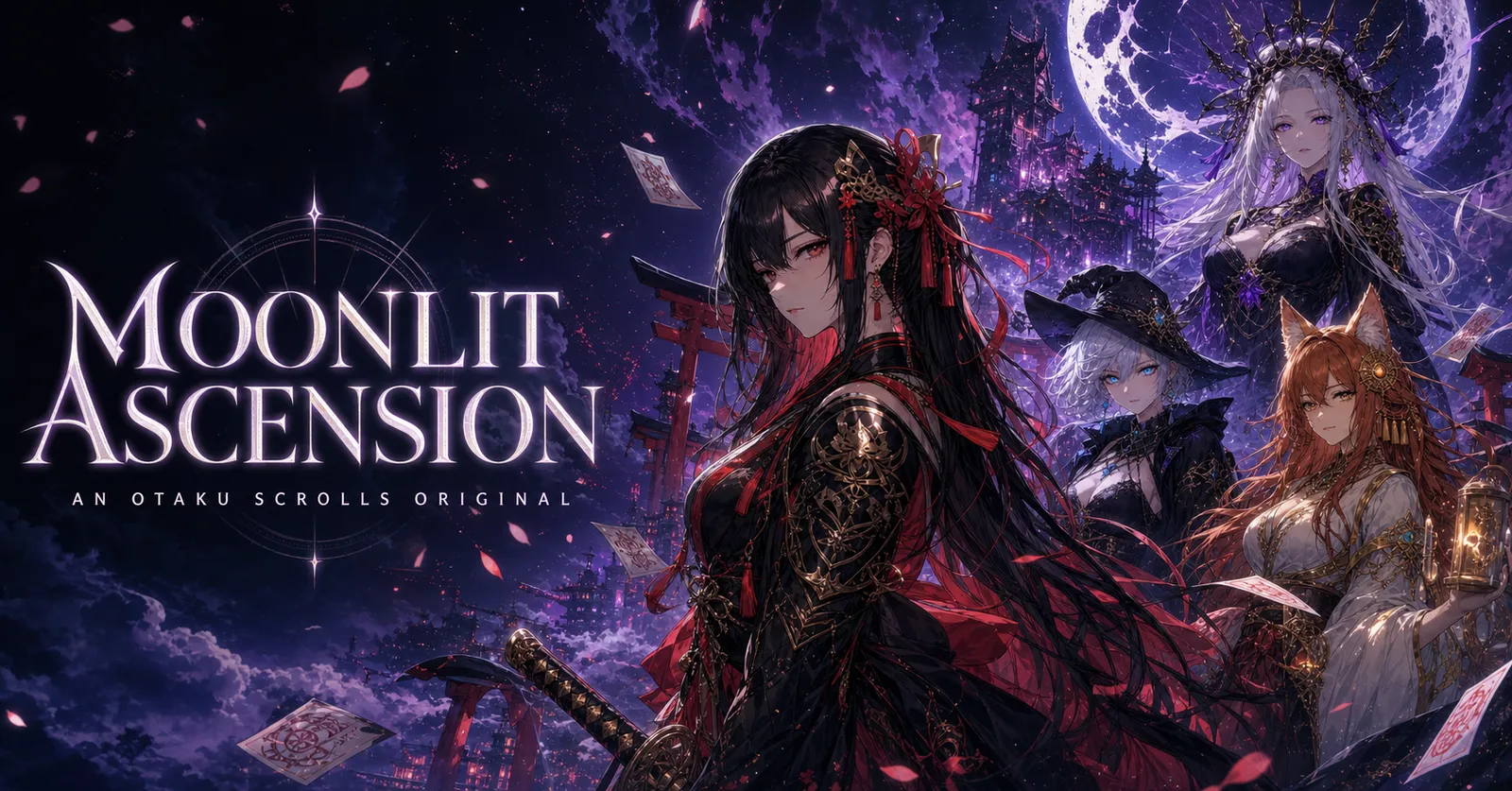
Otaku Scrolls has a new game, and this one is coming for the part of your brain that says, “I will stop after one more battle,” approximately fourteen battles in a row. Link to play Moonlit Ascension on Otaku Scrolls
Moonlit Ascension is an original browser-based anime roguelike deckbuilder built around three playable heroines, a large pool of illustrated cards, branching campaign paths, and a final confrontation with the Moon Empress. It combines strategic deck construction with flashy anime combat while keeping the entire experience inside the browser, where it can quietly consume the evening you planned to spend being responsible.
The game supports mouse, keyboard, and touch controls, so it can be played on desktop or mobile without a separate installation. Runs save locally on the player’s device, making it easy to step away and return without sending an almost-perfect deck into the digital void.

Three Heroines Make Every Run Feel Different
The first major choice in Moonlit Ascension happens before the first card is played: selecting one of three playable anime heroines.
Each heroine begins with her own starter deck and passive ability, so the decision involves more than choosing a favorite character portrait and promising the others you will pick them next time. The starting cards shape the earliest battles, while the passive influences how that deck develops as the run continues.
That structure gives each heroine a distinct strategic identity without asking players to understand all 56 cards immediately. The starter deck provides a direction, the passive rewards certain decisions, and later card choices let the player strengthen that plan or abandon it after discovering something more dangerous and entertaining.
A reliable opening strategy may carry one run, while another run offers cards that encourage a completely different approach. This gives players a real reason to try all three characters. Learning another heroine is not simply replaying the campaign with a different animation. It means approaching the card pool through another starter deck, another passive, and another set of priorities.
Fifty-Six Cards Create Beautiful Trouble
At the center of Moonlit Ascension is a collection of 56 illustrated cards built around synergy-driven mechanics. That is enough variety to support experimentation, but focused enough that players can begin recognizing combinations instead of staring at every reward screen like they have been handed a magical tax form.
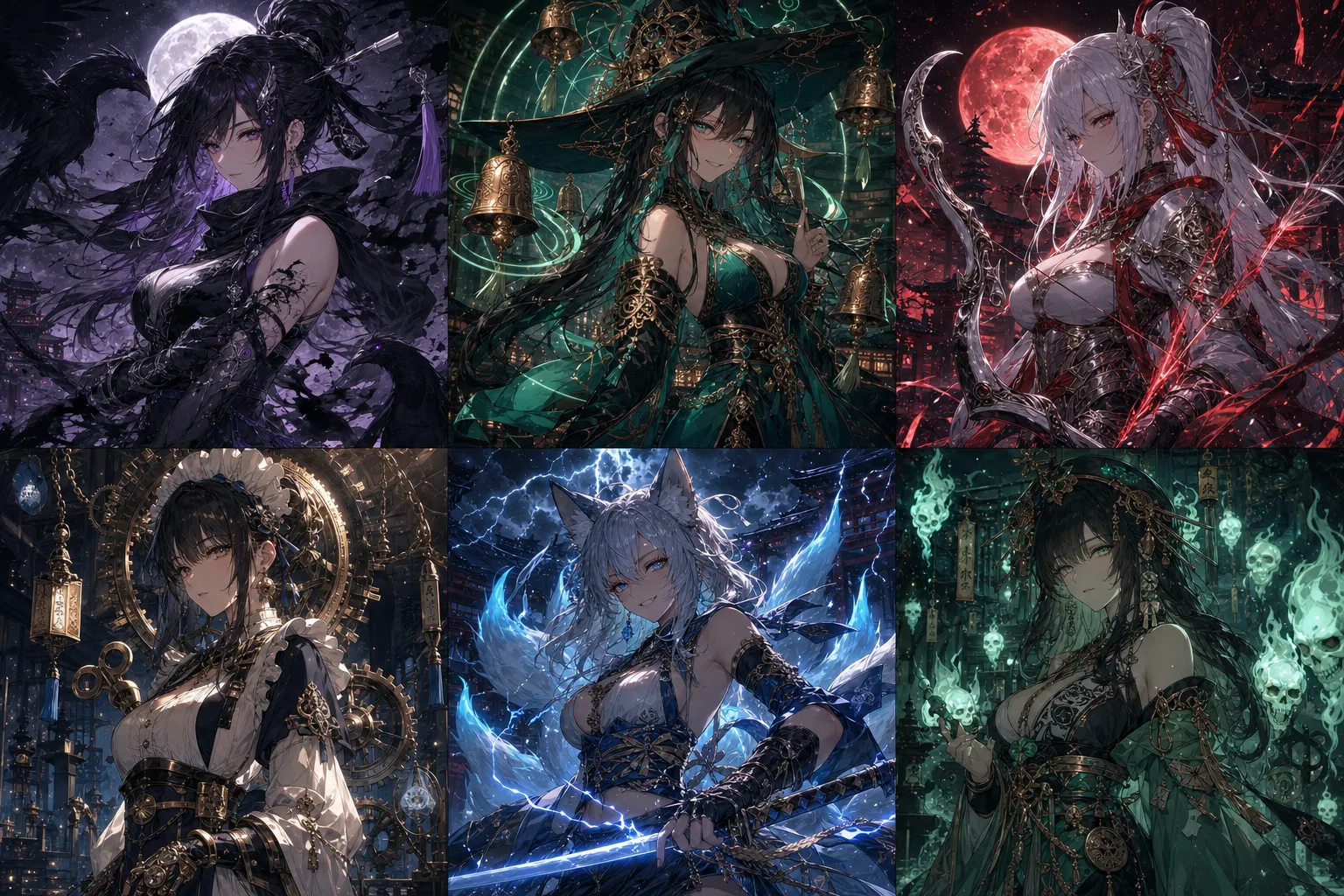
The mechanics include Spirit, Charge and Discharge, Hex, Aegis, Retain, Exhaust, Echo, upgrades, discounts, and finishers. These systems give cards value beyond their immediate numbers. A card may matter because of what it prepares, what it preserves, what it removes, or how it interacts with the rest of the hand.
Charge and Discharge create a rhythm of preparation and release. Retain changes the timing puzzle by keeping an important card available for later. Exhaust can narrow the deck during combat, while Echo adds another layer to how plays resolve. Spirit, Hex, and Aegis give offensive, defensive, and setup-focused strategies more ways to connect.
Upgrades and discounts can change how efficiently a deck operates, while finishers give a carefully assembled strategy somewhere dramatic to land. Building a deck is not just about taking the strongest-looking card. It is about finding the card that makes everything else better.
A pile of individually impressive cards can still become expensive moonlit cardboard when none of them cooperate. The satisfying runs are the ones where the engine begins to click, the hand starts solving problems instead of creating them, and a combination that looked accidental several stages earlier suddenly feels like the entire plan.
Four Campaign Paths Lead to Four Bosses
A run is structured around four campaign paths, with each path containing six stages and ending in its own unique path boss.

This gives the campaign a clear shape. Players are not wandering through an endless chain of unrelated encounters; they are advancing along a defined route with a boss waiting at the end. Six stages leave room for a deck to evolve while keeping the path focused.
Because every route has a unique boss, choosing a path also determines the major challenge waiting ahead. The deck must survive the stages in front of it, but it also needs to become capable of handling the opponent at the path’s conclusion.
Defeating that boss is not the end of the ascent. Every successful campaign leads to a final battle against the Moon Empress, who tests the deck assembled across the run: every synergy discovered, every card upgraded, every discount taken, and every moment when the safer choice was ignored because the shinier card looked funnier.
A new heroine, route, and sequence of cards can reshape the journey even when the final destination remains the same.
Cinematic Combat Still Shows You What Matters
Deckbuilders live or die by clarity. Players need to understand what enemies are planning, how much damage is coming, what their defenses can absorb, and why a status effect just turned a brilliant plan into a small disaster.
Moonlit Ascension presents that information through enemy intent previews, live damage values, visible HP and Block, and explanations for active statuses. The strategy remains readable without draining the spectacle from the fight.
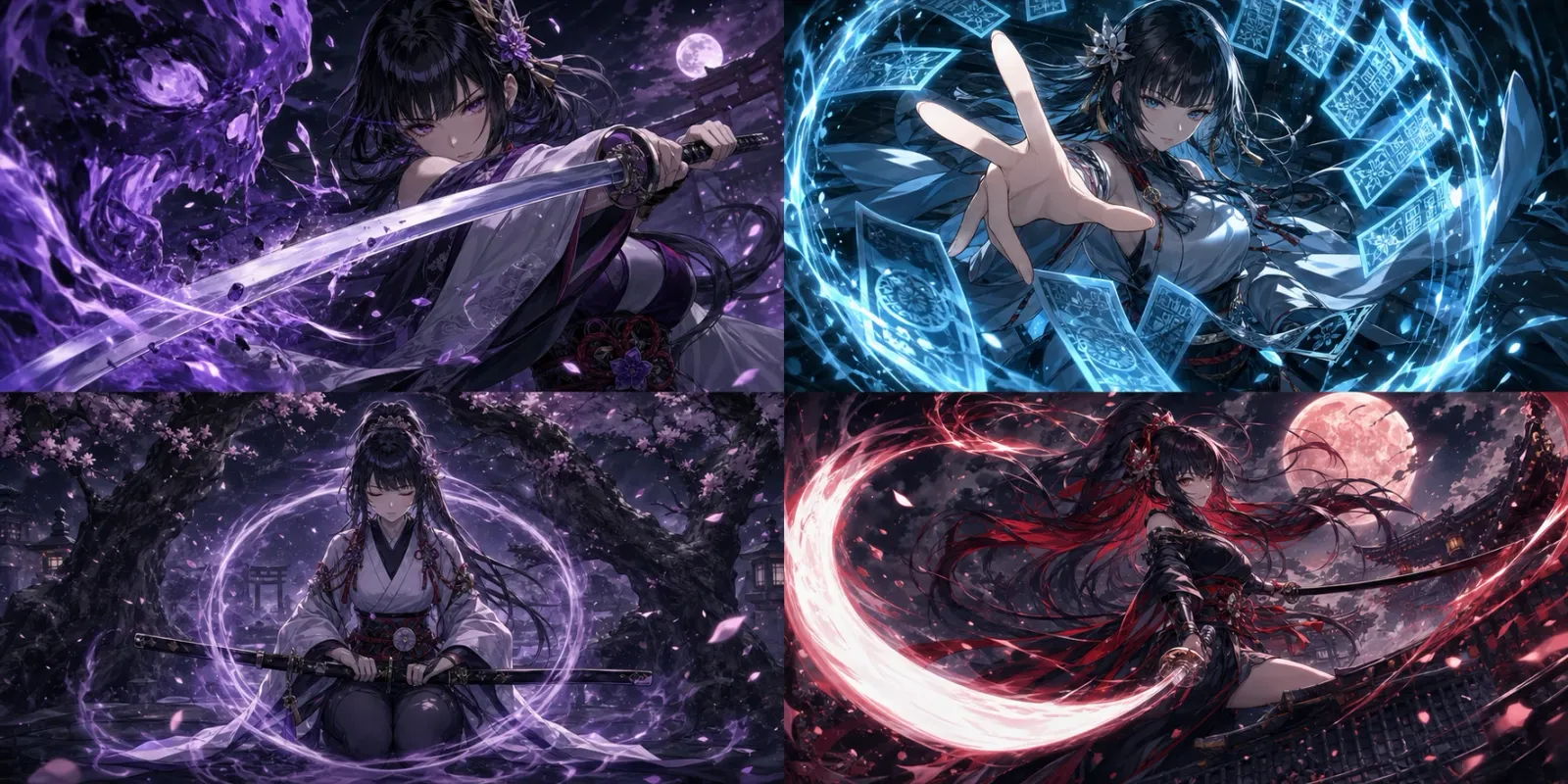
Animations give attacks and abilities impact, while music and sound effects help battles feel like confrontations rather than spreadsheets wearing fantasy costumes. Fullscreen play lets the artwork, effects, and interface take over the display once a run reaches the point where every card matters and interruptions become deeply inconvenient.
The enemy intent system turns each round into a problem the player can solve. Incoming attacks can be weighed against current HP and Block. Status explanations reduce guesswork. Live damage values make the results of a card sequence easier to follow. The presentation is cinematic, but the information needed to make smart choices remains visible.
That balance is exactly what an anime deckbuilder needs. Combat can flash, shake, animate, and unleash dramatic finishers, but players should still understand why they won, why they lost, or why keeping one Retain card for an extra turn was either genius or strategic self-sabotage.
With three distinct heroines, 56 illustrated cards, four six-stage paths, four path bosses, and the Moon Empress waiting at the summit, Moonlit Ascension has plenty of room for clever builds and spectacular mistakes. There is no installation standing between you and the first run. Open the game, choose a heroine, build something wonderfully unfair, and begin climbing.