Phantom Blade Zero: Release Date, Combat, Reviews, and Why the Hype Is Real
By Otaku Scrolls · October 26, 2026
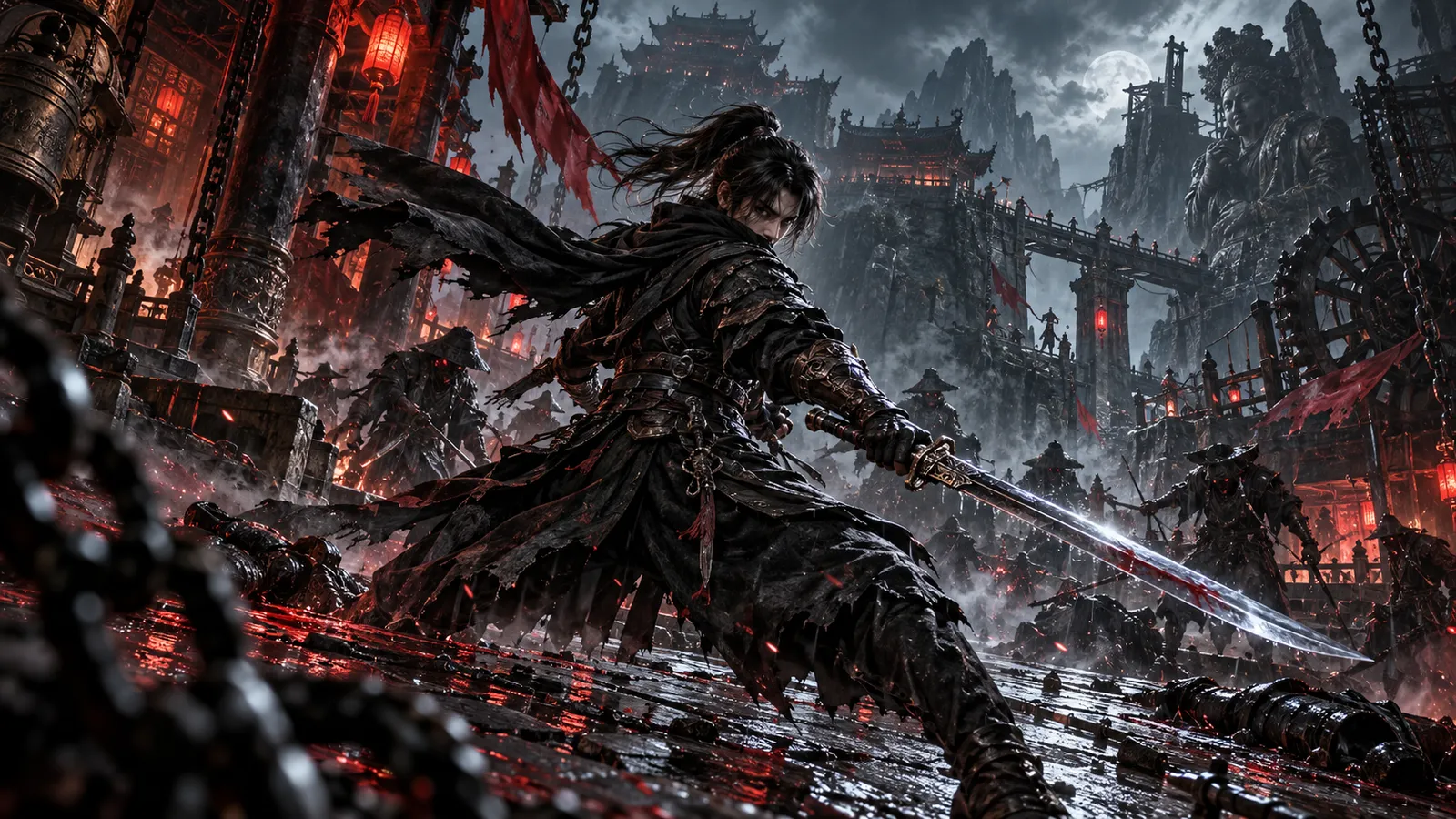
Some games spend years promising that their combat will make you feel like an unstoppable warrior. Phantom Blade Zero has a more specific ambition: it wants you to feel like the star of a beautifully choreographed, extremely dangerous kung fu movie. After years of dazzling trailers, extended gameplay demonstrations, and increasingly enthusiastic hands-on impressions, that promise is finally about to be tested.
Developed by Chinese studio S-GAME, Phantom Blade Zero is a dark wuxia action RPG launching on PlayStation 5 and PC in late October 2026. It combines impossibly quick swordplay, supernatural horror, sinister machinery, and a revenge story with an actual ticking clock. Its signature aesthetic has its own name: kungfupunk.
But this is no longer a case of impressive trailers doing all the talking. On October 26, 2026, the first full reviews arrived, and the reception has been remarkably strong. With millions of players following its development, Phantom Blade Zero suddenly looks like one of the biggest action-game stories of the year.
What Is Phantom Blade Zero?
At its heart, Phantom Blade Zero is a single-player, third-person action RPG built in Unreal Engine 5. You explore interconnected areas, uncover secrets, complete side stories, gather weapons, and fight enemies ranging from ruthless swordsmen to monstrous, almost theatrical bosses. The emphasis is not on building the largest possible open world. It is on making every encounter and every location feel memorable.
S-GAME is led by founder and creative director Qiwei “Soulframe” Liang, whose earlier Rainblood games laid the foundation for the Phantom Blade universe. This is the studio's most ambitious console and PC project, with the polish and production values to compete for attention alongside established action franchises.
If the footage reminds you of Sekiro: Shadows Die Twice, Nioh, Devil May Cry, or Wo Long: Fallen Dynasty, you are seeing pieces of a familiar action-game vocabulary. But Phantom Blade Zero is trying to arrange those pieces into something with a different rhythm: faster, more fluid, and unmistakably inspired by Chinese martial arts cinema.
A Framed Assassin With Only 66 Days to Live
The protagonist is Soul, a highly skilled fighter who has been framed for murdering his master. Betrayed and hunted by former allies, he suffers a catastrophic injury to his heart and survives through an unnatural intervention. The catch is brutal: he has just 66 days left to live.
That premise gives the adventure its momentum. Soul must pursue the truth behind the conspiracy, clear his name, and search for a way to save himself before his borrowed time runs out. Along the way, he enters a dangerous martial world known as the Wulin, where loyalty is fragile, powerful factions have hidden agendas, and the boundary between life and death is far from simple.
The setup is wonderfully old-school: a lone swordsman, a terrible betrayal, and an impossible deadline. It also provides a strong emotional hook beneath all those spectacular finishing moves. Whether the completed narrative delivers on that potential is one of the questions raised by the early reviews.
Kungfupunk: A World That Looks Like Nothing Else
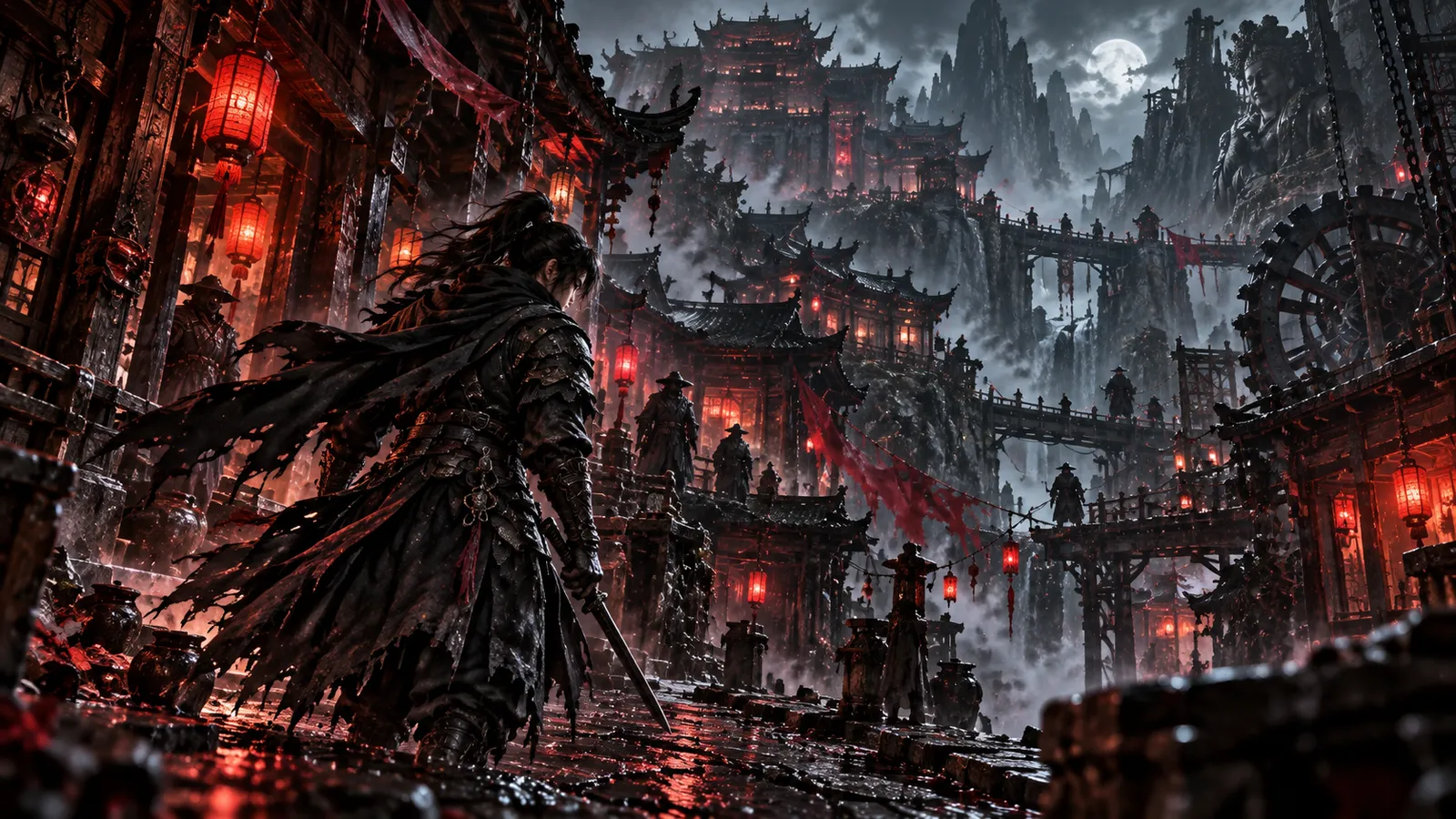
The game's setting draws from wuxia, the Chinese storytelling tradition of wandering martial heroes, extraordinary techniques, rival schools, and questions of honor. S-GAME then twists that foundation with dark fantasy, Chinese folk horror, mechanical prosthetics, decaying industrial structures, and a modern musical edge.
The result is haunting. Mist rolls across forgotten settlements. Traditional courtyards become dueling grounds. Elaborate machines sit beside ancient architecture, and enemies can seem as likely to emerge from a nightmare as from a martial arts school. This is not just historical China with monsters added. It is a deliberately strange fantasy world built around its own identity.
The Combat Is the Main Attraction
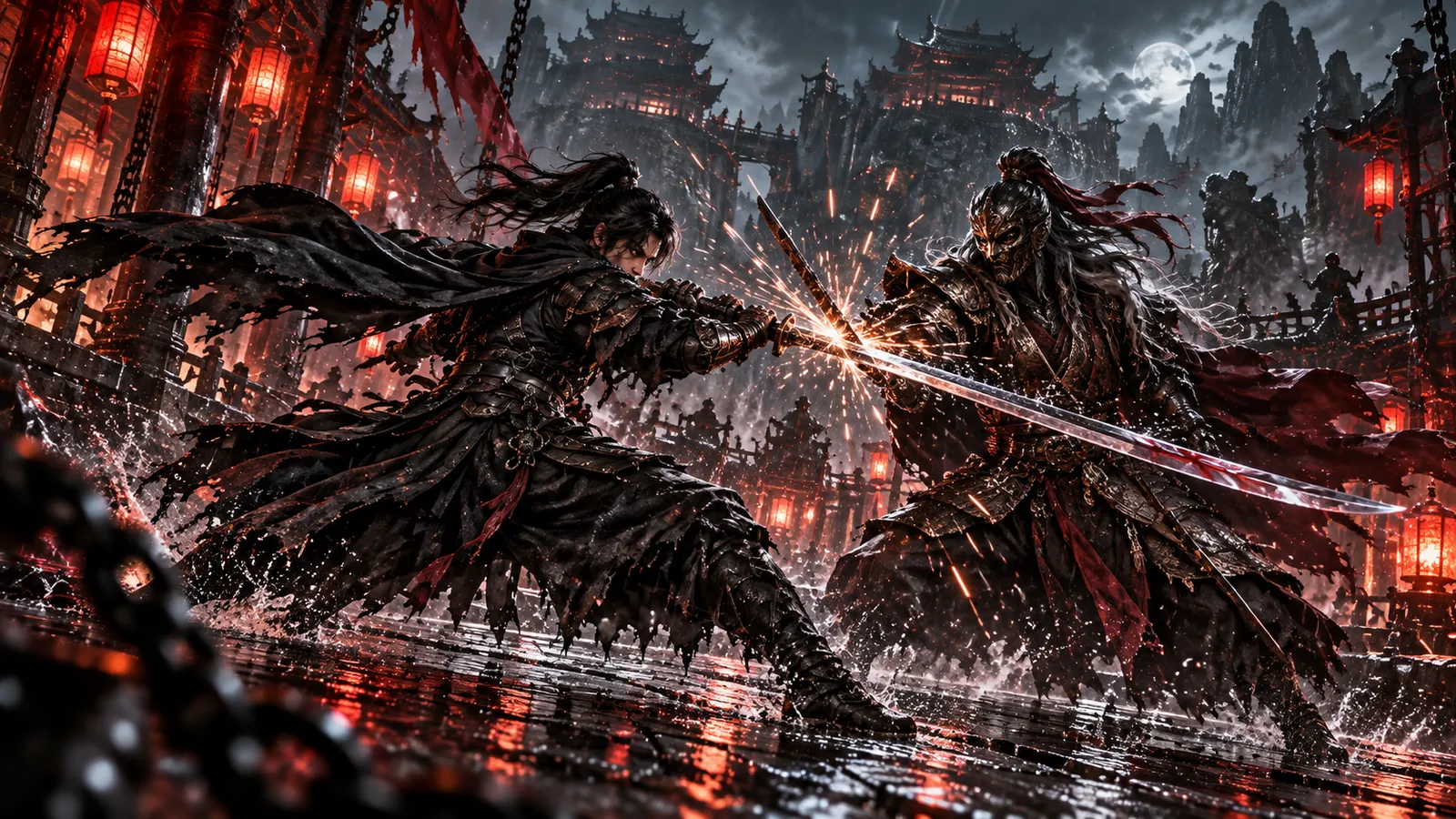
Let's be clear about the biggest source of the hype: Phantom Blade Zero looks phenomenal in motion. Fights unfold through a dizzying exchange of cuts, evasions, deflections, counters, and acrobatic techniques. Instead of the heavy stop-and-start cadence found in some challenging action RPGs, the game is designed to make offense and defense feel like connected parts of one martial arts performance.
There is still a meaningful resource system. Sha-Chi governs defensive maneuvers and certain powerful techniques, while successful play creates opportunities for devastating follow-up attacks. Regular strikes do not consume Sha-Chi in the same way that every attack might drain stamina in a traditional Soulslike. That distinction encourages aggression without abandoning precision.
Importantly, the action is not merely a flashy animation playing out while you watch. Hands-on reports describe encounters that demand timing, positioning, and an understanding of enemy patterns. The choreography makes the action cinematic; player control makes it satisfying. Landing a perfect deflection and immediately turning it into a flowing combination is exactly the kind of combat fantasy the game is selling.
Is Phantom Blade Zero a Soulslike?
Not in the usual sense. The game shares some DNA with modern challenging action RPGs, including formidable bosses, defensive timing, and exploration that rewards curiosity. But it is not built around copying Dark Souls' entire structure.
Early reviewers describe a more directed adventure, adjustable difficulty, no loss of accumulated resources on death, and enemies that do not endlessly respawn after being defeated. S-GAME has named difficulty options including Wayfarer for a more approachable experience, Hellwalker for tougher and more adaptive opponents, and the especially demanding Sixty-Six Days mode.
This matters because Phantom Blade Zero is not exclusively targeting players who want to spend an evening getting crushed by the same boss. It wants people who love kung fu films and stylish character-action games to enjoy the journey, while still giving dedicated action veterans plenty to master.
Dozens of Weapons, Terrifying Bosses, and Secrets Worth Finding
A beautiful combat system needs more than a single reliable sword. According to S-GAME's official gameplay deep dive, the game offers more than 30 main weapons and 25 secondary weapons called Phantom Edges. These secondary tools can radically alter encounters, with different attack types, unusual combat abilities, and even assistance from summoned fighters.
Some of the most interesting equipment can be obtained from defeated enemies, letting Soul appropriate the techniques of the opponents who once threatened him. Weapon upgrades, accessories, and a system for reclaiming upgrade materials encourage experimentation rather than punishing players for committing to an early favorite.
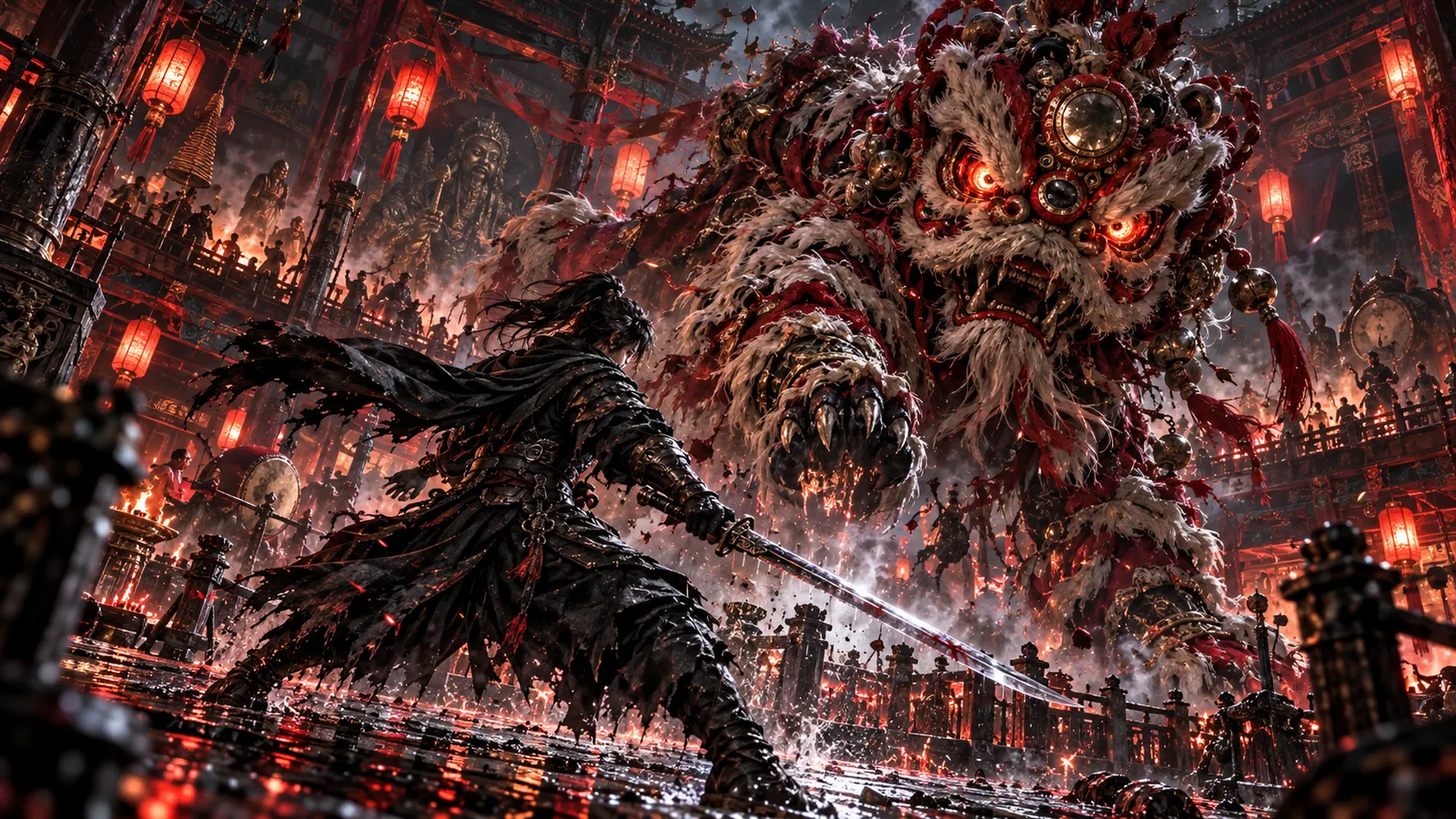
The bosses may be the real showstoppers. S-GAME has showcased elaborate sword formations, strange supernatural creatures, and an unforgettable Lion Dance Grandmaster encounter. These fights are designed as martial performances with dramatic personalities, not just enormous health bars. Their visual invention is a major reason the trailers have traveled so far across gaming communities.
Exploration also appears to have more substance than the early boss-heavy marketing suggested. Hidden routes, environmental mechanisms, optional objectives, and character-driven side quests give players reasons to inspect the world between battles. The hand-painted, ink-wash-style map is intended to encourage discovery rather than reduce the adventure to a checklist.
Donnie Yen Is Helping Bring the Kung Fu to Life
One of the game's most impressive behind-the-scenes details is the involvement of Donnie Yen, the martial arts actor known internationally for Ip Man and Rogue One. He has served as a creative consultant since 2023, advising on choreography and helping shape the game's approach to kung fu. He also provides facial and motion capture for the character Mó Yuan, leader of the Bastion of Mó.
This is more than attaching a celebrity name to a trailer. S-GAME has emphasized authentic martial arts performances and sophisticated motion capture throughout development, including specialized choreography for group encounters and traditional Chinese performance arts. That attention helps explain why the action looks like something staged by an expert fight director instead of a collection of random sword animations.
Why the Phantom Blade Zero Hype Has Become So Huge
The excitement has not come from nowhere. Phantom Blade Zero made a striking first impression in 2023, then maintained momentum through increasingly substantial gameplay showcases rather than relying on cinematic teasers alone. Fans saw real fights, exploration, weapon systems, boss mechanics, and eventually extended footage of the story and world.
In September 2026, S-GAME announced that Phantom Blade Zero had surpassed 3 million wishlists across platforms. That is an enormous measure of interest for a game that is not a numbered sequel to an established international blockbuster. Wishlists are not sales, but they show how successfully the project has captured players' imaginations.
The timing is significant, too. There is clearly an audience for precision swordplay and challenging, stylish action. Yet Phantom Blade Zero is not selling itself as a clone of the genre's giants. Its fusion of wuxia storytelling, movie-like choreography, horror imagery, and mechanical fantasy gives it a visual identity you can recognize in seconds.
And now the excitement has moved beyond speculation. Extended hands-on previews from outlets such as Push Square were already enthusiastic about its bosses and combat feel. The finished-game reviews are giving those earlier impressions real weight.
The First Reviews Suggest the Hype Is Justified — With Caveats
On October 26, critics began publishing their verdicts. Early aggregations placed the game at roughly 88 on Metacritic, while outlets including Push Square awarded it 9/10 and Video Games Chronicle gave it 4/5. Those aggregate scores can change as more reviews appear, but the initial picture is very encouraging.
The praise is remarkably consistent: fast and expressive combat, inventive weapons, exceptional boss fights, and a world with genuine artistic personality. Some reviewers have gone as far as discussing it as a potential Game of the Year contender.
It is not receiving universal praise, however. Several reviews point to uneven or confusing storytelling, while others report frame-rate dips, technical hiccups, or rough edges in the presentation. These are meaningful caveats, especially for anyone buying on PC and hoping for perfectly smooth performance on day one.
Still, the most important thing to remember is that Phantom Blade Zero's core appeal is the feeling of fighting. And on that front, the people who have played the finished game are overwhelmingly impressed.
Release Date, Platforms, Price, and PC Requirements
Phantom Blade Zero officially launches October 29, 2026, with the digital release arriving on October 28 in the United States and certain other regions because of the global unlock timing. It will be available on PlayStation 5, including PS5 Pro enhancements, and PC through Steam and the Epic Games Store. An Xbox version has not been announced.
The standard digital edition costs $59.99 USD, while the $69.99 Digital Deluxe Edition adds exclusive appearances, a digital artbook, and a soundtrack. Pre-order bonuses include an accessory and an outfit that can also be earned through normal gameplay. Players who prefer a physical copy on PS5 should note that those editions are scheduled for 2027.
On PC, the official Steam listing recommends 16 GB of RAM and an RTX 3060 Ti or Radeon RX 6700 XT for a 1440p/60 FPS target with upscaling enabled. It also requires an SSD and lists Denuvo DRM. As always, published requirements are not a replacement for real-world performance testing, particularly when early reviews have noted some technical issues.
Could Phantom Blade Zero Become a New Action Classic?
There was always a risk that Phantom Blade Zero would be remembered as another game with trailers almost too beautiful to believe. Its speed, intricate choreography, and dramatic art direction set expectations sky-high. The closer launch approached, the bigger the question became: Does it actually feel that good to play?
The first full reviews suggest that the answer, at least where combat is concerned, is a resounding yes. Not every part of the experience appears equally polished, and its narrative may divide players. But S-GAME looks to have created something with the most important quality an action game can possess: a compelling reason to pick up the controller and keep fighting.
For fans of Sekiro, Nioh, Devil May Cry, and dark, atmospheric sword-fighting adventures, Phantom Blade Zero deserves a very close look. In just a few days, the rest of the world will find out whether this fierce, beautiful vision of kung fu can become one of 2026's defining games.