Smoking Behind the Supermarket with You Season 1: Why This Mature Romance Is Stealing Hearts in Summer 2026
By Mira Ellison · July 28, 2026

Summer anime seasons are usually packed with heroes screaming attack names, teenagers discovering forbidden powers, and at least one fantasy protagonist being reincarnated as household furniture. Then Smoking Behind the Supermarket with You strolls in, lights a cigarette behind a grocery store, and somehow becomes one of Summer 2026's most comforting shows.
Based on Jinushi's manga, the series follows Sasaki, a burned-out 45-year-old office worker whose life has been reduced to deadlines, workplace exhaustion, and brief visits to his neighborhood supermarket. His favorite part of those visits is seeing Yamada, the cheerful cashier whose smile offers him approximately twelve seconds of relief from corporate despair.
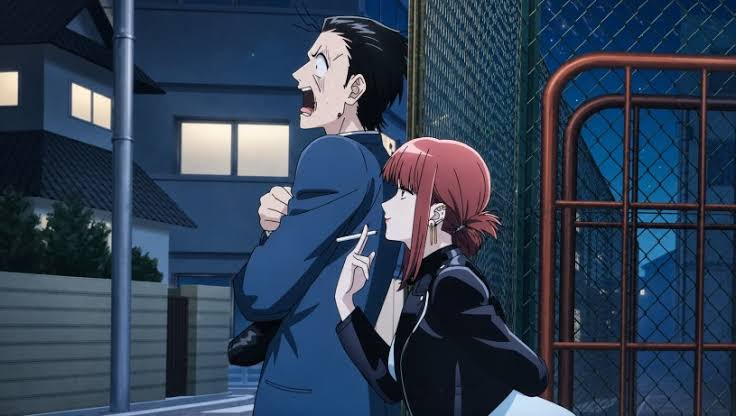
One evening, Yamada is nowhere to be found. Instead, Sasaki meets Tayama, a pierced, sharp-tongued woman who invites him to smoke in the employee area behind the store. The audience immediately learns that Tayama and Yamada are the same person. Sasaki does not, because he possesses the observational abilities of a man whose soul has been processed through too many spreadsheets.
That setup sounds like broad romantic-comedy fuel. Season 1 turns it into something gentler, funnier, and surprisingly mature.

A Romance About Adults Who Are Actually Tired
The easiest explanation for the anime's appeal is that Sasaki and Tayama feel like adults rather than high school characters wearing office clothes.
Sasaki is not flustered because he has never spoken to a woman. He is cautious because he understands age, boundaries, workplace appearances, and the many ways an innocent interaction can become uncomfortable. Tayama is not waiting for destiny to push the relationship forward. She creates opportunities to talk, teases Sasaki when he retreats into himself, and remembers details he assumes nobody notices.
Their conversations are often about bad days, difficult coworkers, embarrassing misunderstandings, or the simple need to sit somewhere quiet. That may not sound like premium romance material, but the show understands something many louder series miss: intimacy often begins when someone makes ordinary life feel slightly less exhausting.
There are no magical fireworks required. Sometimes romance is just somebody remembering what bothered you yesterday.
Yamada and Tayama Make the Gimmick Work
The secret-identity premise could have become frustrating quickly. Different clothes, makeup, posture, and attitude are apparently enough to defeat Sasaki's facial recognition entirely. Yet Yamada and Tayama are not merely two costumes. They represent two sides of the same woman.
As Yamada, she is polished, welcoming, and professionally cheerful. As Tayama, she is more direct, playful, and willing to poke at Sasaki's defenses. The transformation gives her room to speak honestly while maintaining enough distance to feel safe. She can watch Sasaki admire “Yamada,” tease him about it as “Tayama,” and learn how he sees her when he believes she is not present.
Sasaki thinks Yamada is an untouchable source of comfort and Tayama is an unexpectedly kind smoking companion. The audience sees his affection forming around the same person from two directions.
It is romantic dramatic irony without the usual exhausting cruelty. Nobody is weaponizing the secret. Tayama is mostly enjoying the world's lowest-stakes undercover operation.
The Chemistry Lives in Tiny Gestures
Season 1 is often at its best when almost nothing happens.
A shared complaint becomes encouragement. A casual gift becomes a reason to meet again. Sasaki worries about whether he has overstepped; Tayama notices and nudges him back toward normal human behavior. The anime turns minor exchanges into meaningful progress because each one shows these two people beginning to occupy space in each other's thoughts.
Episode 2 focuses on workplace frustration and the comfort of being understood after a rough day. Episode 3 builds around a gift and Sasaki's awkward attempt to return the kindness. Neither premise would survive a dramatic trailer voice-over, but both work because the emotional stakes feel recognizable.
This is not a romance driven by misunderstandings that could be solved with one text message. It is driven by two adults slowly deciding that the other person's company matters.
They do not need to be rescued from villains. They need relief from loneliness, routine, and the feeling that every day is blending into the next.

Sasaki Is a Refreshingly Different Romance Lead
Anime romance often gives us protagonists who are either impossibly cool or so passive they could be replaced by a decorative lamp. Sasaki sits in a more interesting middle ground.
He is considerate, anxious, lonely, and deeply aware of how he might appear to others. His instinct is to retreat before he becomes a burden. That can be frustrating, but it also makes him sympathetic. He has spent so long minimizing himself that accepting affection feels suspicious.
Takuya Sato gives Sasaki the exhausted warmth the role needs. He sounds like a man holding himself together with convenience-store coffee and professional politeness, yet there is still softness beneath the fatigue.
Seena Hoshiki gives Yamada and Tayama distinct rhythms without making either persona feel fake. Tayama's teasing energy keeps the show from sinking into melancholy. She can turn a gloomy conversation into flirtation with one perfectly timed comment, usually while Sasaki's brain is still loading the previous sentence.
Quiet Does Not Mean Boring
Asahi Production's adaptation does not force the material into a louder shape. The direction gives conversations room to breathe, using expressions, pauses, posture, and the strange privacy of the supermarket's back area to create atmosphere.
That location is essential. There are no cherry blossoms, festival fireworks, or rooftop sunsets arranged by the romance department. It is a cramped space beside a supermarket where two people temporarily step outside their public roles.
Sasaki does not have to be the dependable office worker there. Yamada does not have to perform customer-service cheerfulness. Behind the store, both can be messier, quieter, and more honest.
The opening theme by ZUTOMAYO adds a stylish burst of personality, while imase's ending theme, “Fiction,” fits the show's relaxed emotional afterglow.
The Smoking Is a Setting, Not the Real Fantasy
The title makes the cigarettes impossible to ignore, and the series naturally carries a smoking advisory. It is worth saying plainly that smoking is harmful, even when anime makes standing beneath a fluorescent light with a cigarette look strangely cinematic.
But the fantasy here is not really tobacco. It is having a reliable place to decompress with someone who understands you.
The smoke break creates a boundary around their conversations. It is temporary, private, and separate from the rest of the day. The series uses smoking as a social ritual and narrative meeting point, not as a substitute for personality.
What viewers are falling for is not the cigarette. It is the idea that after a miserable shift, somebody might be waiting in the usual spot.
Why It Is Standing Out in Summer 2026
The Summer 2026 anime season has spectacle, returning franchises, and ambitious adaptations fighting for attention. Smoking Behind the Supermarket with You stands out by refusing to compete on those terms.
Its hook is modest. Its setting is mundane. Its protagonist is a middle-aged salaryman who looks permanently one email away from becoming mist. That restraint makes the series feel different from almost everything around it.
The anime began its regular Japanese broadcast on July 9, 2026, and is streaming on Crunchyroll. Three regular episodes had been released by July 23, with episode four scheduled for July 30. Crunchyroll also released twelve mini-episodes in June that repackage material from the anime's opening stretch, giving curious viewers an easy way to sample its tone.
More importantly, the show arrived at the right moment. Anime fans have spent years asking for romances about adults with jobs, baggage, and problems that cannot be defeated by joining the student council. This series answers that request without turning adulthood into nonstop misery.
It admits that adult life can be lonely and repetitive. Then it suggests that one sincere connection can still change the shape of a week.
A Slow Burn Worth Savoring
Season 1 is not racing toward a confession, and that is part of the charm. The pleasure comes from watching Sasaki and Tayama establish a rhythm, test boundaries, and gradually become more important to one another.
The identity joke will eventually need to evolve, but right now it adds anticipation. Sasaki is already drawn to Yamada's warmth and Tayama's honesty. He simply has not realized he is falling for the same woman twice, which is either adorable or proof that this man desperately needs a vacation.
For viewers tired of romances built entirely around teenage panic, Smoking Behind the Supermarket with You offers something warmer and more lived-in. It is about people who are not discovering love for the first time. They are rediscovering the possibility that daily life can contain something worth looking forward to.
In a season full of heroes trying to save the world, Sasaki and Tayama are simply trying to make each other's evenings a little better.
Somehow, that feels just as important.