Top 10 Best 90s Anime That Still Feel Cooler Than Everything Else
By Maya Sterling · July 28, 2026
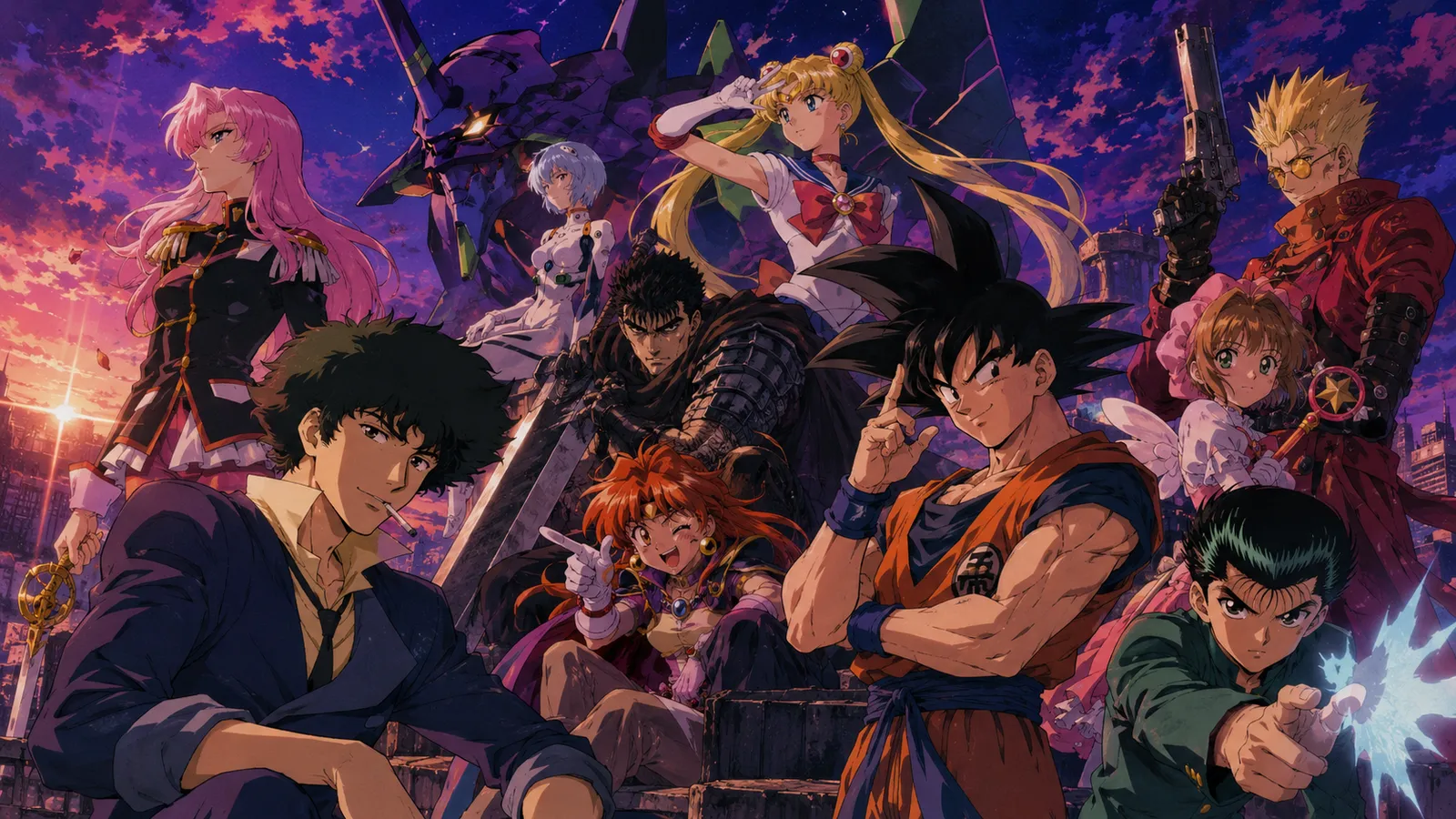
There is something almost unfair about 90s anime. The colors were moodier, the shadows were heavier, the soundtracks acted like they had something to prove, and every leather jacket looked capable of carrying an entire character arc.
This was the decade when anime exploded into living rooms far outside Japan, often through questionable VHS copies, late-night television blocks, and a friend who swore the tape was “totally the first episode.” Ranking the best 90s anime is basically an invitation to start a very polite internet war, but somebody has to do it. These ten shows best capture the decade’s style, influence, imagination, and pure rewatchable coolness.
10. Berserk
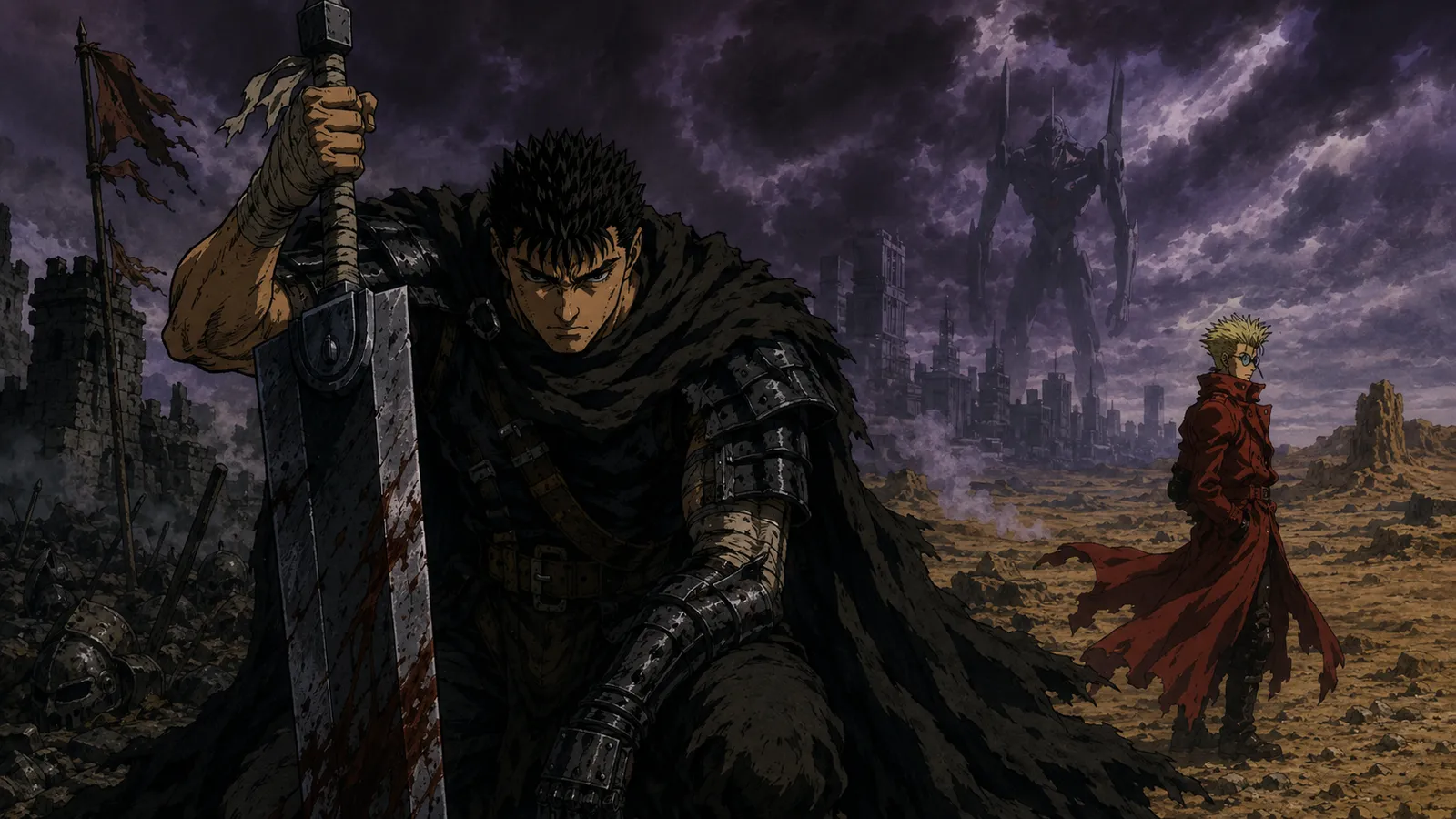
The 1997 Berserk anime is not the complete version of Kentaro Miura’s story, and it ends at the exact moment your emotional health would prefer it did not. That is also why it remains unforgettable.
Its medieval world feels dirty, dangerous, and strangely intimate. Guts is not merely a huge guy with a huge sword; he is a lonely survivor slowly discovering that friendship might be more frightening than battle. Griffith makes every warning sign look like decorative lighting, while Casca gives the Band of the Hawk its emotional backbone.
The animation can be limited, but the atmosphere, music, and character writing hit with enormous force. It is brutal fantasy with an actual soul.
9. Cardcaptor Sakura
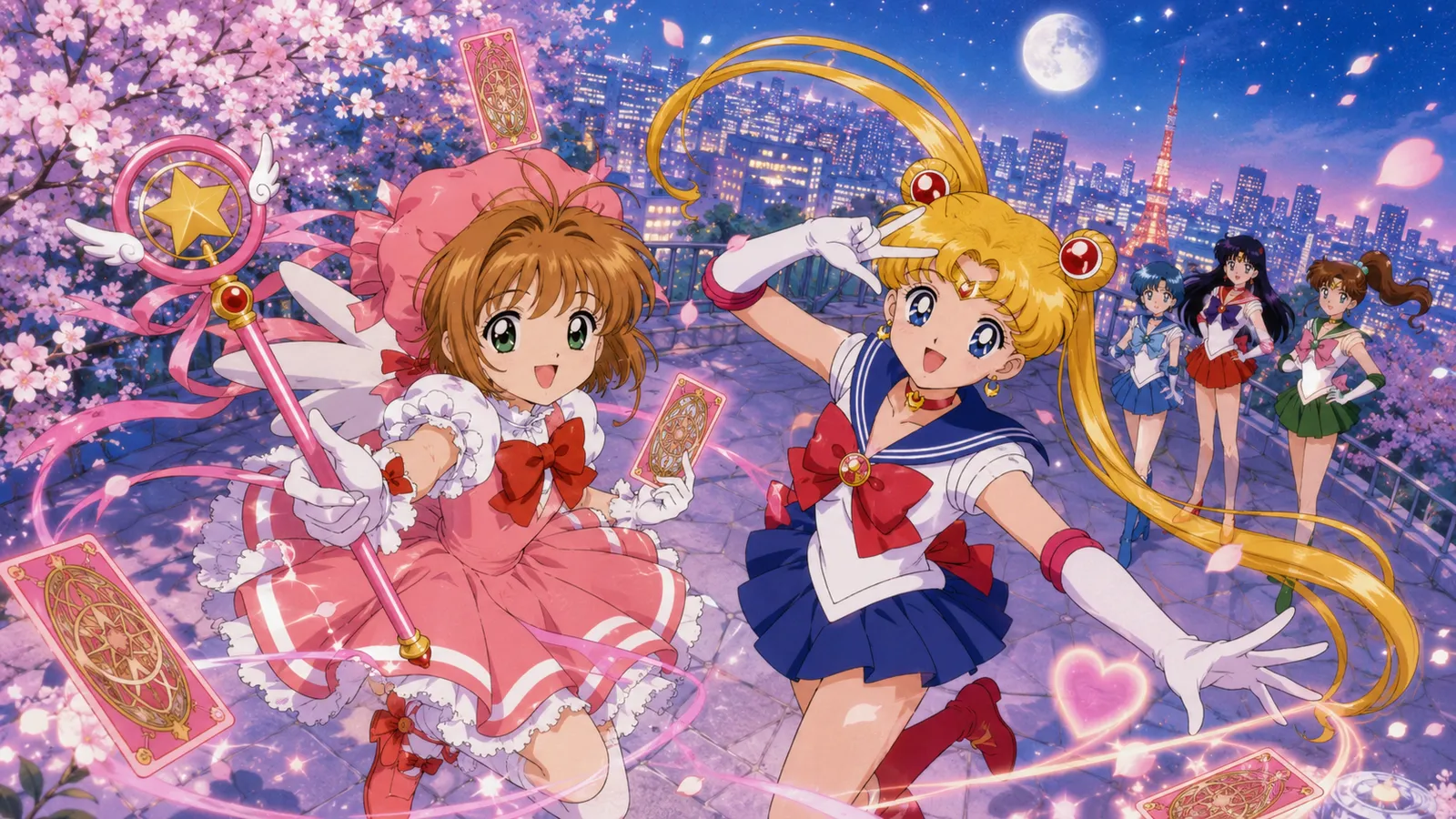
Cardcaptor Sakura is warm, charming, beautifully designed, and powerful enough to make collecting magical cards look like the healthiest hobby imaginable.
Sakura Kinomoto is lovable because she feels brave without becoming invincible. Her friendships and family give the series a gentle sincerity that never becomes sugary nonsense.
The costumes are legendary, the animation remains lovely, and the series understands that kindness can be every bit as heroic as punching a monster through a mountain. Tomoyo also produces better magical-girl outfits than most professional costume departments.
8. Trigun
Trigun introduces Vash the Stampede as a walking disaster with impossible hair and a bounty large enough to give every outlaw immediate career ambition.
At first, it plays like a sci-fi western comedy. Vash dodges bullets and behaves like the least threatening legendary gunman alive. Then the story peels back the jokes and reveals a hero whose refusal to kill is not naïve but painfully deliberate.
That shift makes Trigun special. It has gunfights, desert towns, giant coats, and enough dramatic wind to power a small country, but its real subject is whether compassion can survive in a violent world.
7. Yu Yu Hakusho
Before tournament arcs became a required anime building code, Yu Yu Hakusho showed everyone how to make one feel like the main event of the century.
Yusuke Urameshi begins as a teenage delinquent who dies while doing something unexpectedly heroic. He becomes a Spirit Detective, gathers one of anime’s greatest squads, and starts solving supernatural problems with courage, instinct, and extremely aggressive punching.
The chemistry between Yusuke, Kuwabara, Kurama, and Hiei is almost unbeatable. They insult each other like old friends and fight like monsters. The Dark Tournament remains a masterclass in escalation because every battle matters to the characters, not just the power rankings.
6. Sailor Moon
Sailor Moon helped turn anime into a global phenomenon while teaching an entire generation that friendship, sparkly transformations, and cosmic violence are perfectly compatible.
Usagi is clumsy, emotional, hungry, and frequently overwhelmed. In other words, she is wonderfully human. Her growth from reluctant heroine to determined protector gives the series a heart that survives every monster-of-the-week detour.
The Sailor Guardians became icons because each girl felt distinct. The series made room for romance, comedy, tragedy, fashion, queer representation, and apocalyptic stakes without losing its sense of fun. It became the moon-shaped doorway through which millions of fans entered anime.
5. Dragon Ball Z
Yes, Dragon Ball Z technically began in 1989, but its cultural reign belongs to the 1990s. You cannot discuss that decade without hearing distant screaming and wondering whether Namek has finally exploded.
Dragon Ball Z turned training, transformation, and escalation into an art form. Goku, Vegeta, Gohan, Piccolo, and the rest became international icons. The fights could stretch forever, yet fans kept watching because the show knew how to build anticipation.
Its influence is everywhere: rivalries becoming friendships, impossible new forms, desperate last stands, and heroes breaking their limits after somebody hurts Krillin. It is not subtle, but subtlety has never punched a planet.
4. Revolutionary Girl Utena
Revolutionary Girl Utena looks like a glamorous school fantasy about sword duels and roses. Then it opens a trapdoor beneath the audience and drops everyone into a maze of symbolism, trauma, identity, and extremely suspicious architecture.
Utena Tenjou wants to become a prince, but the series constantly questions what that dream means and who benefits from the roles everyone has been assigned. Anthy Himemiya is one of the decade’s most layered characters, and her quiet expressions often say more than entire speeches.
The theatrical staging makes Utena feel like a fairy tale being dismantled while you are still inside it. It is bold, uncomfortable, funny, and years ahead of its time.
3. Slayers
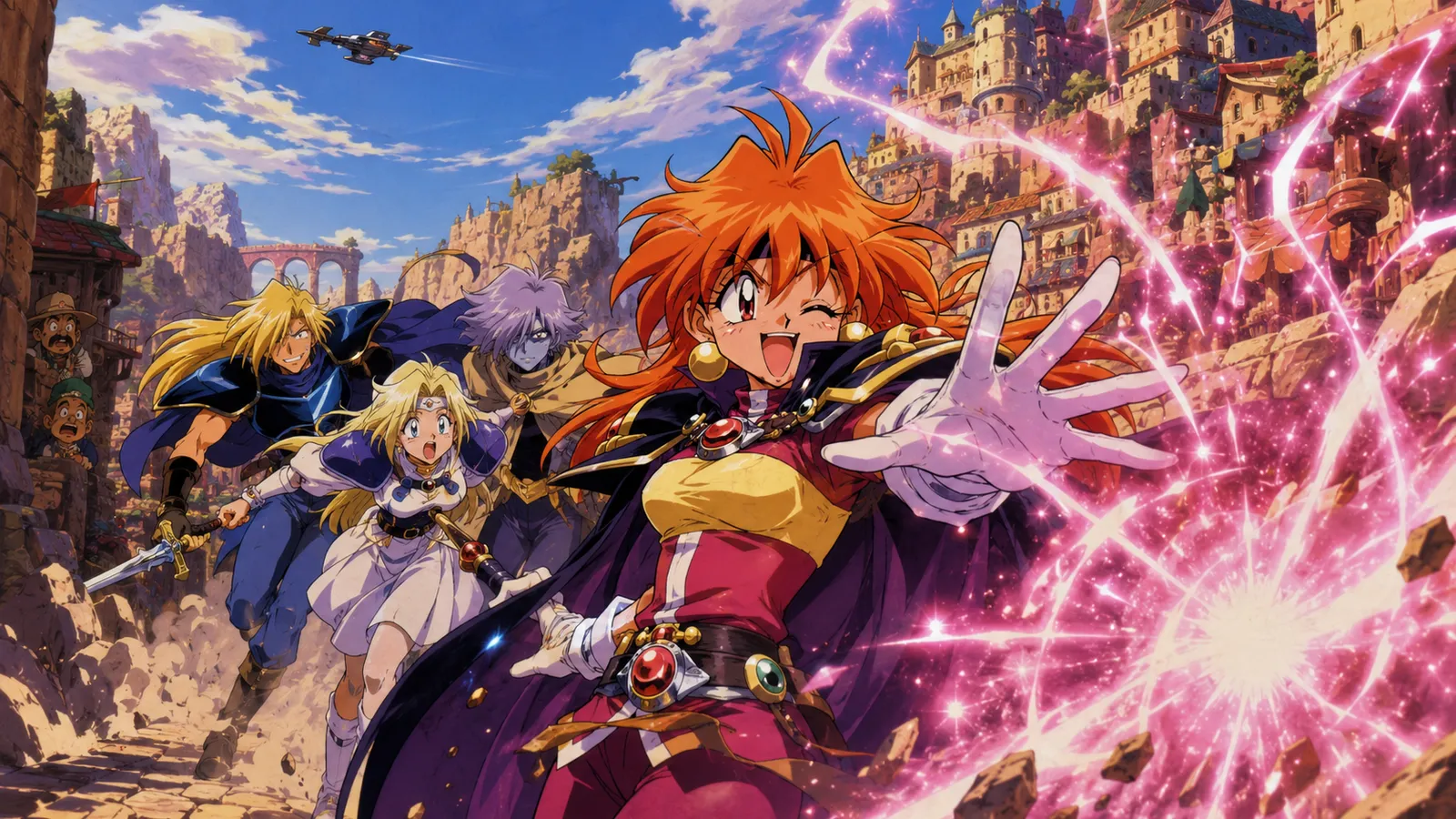
Some anime age gracefully. Slayers kicks down the tavern door, demands dinner, casts Dragon Slave, and laughs while the building collapses.
Lina Inverse is one of the greatest fantasy protagonists ever animated. She is brilliant, greedy, powerful, petty, heroic when it counts, and completely willing to vaporize the landscape over an insult. Gourry is a lovable swordsman with the memory capacity of a decorative spoon, while Zelgadis and Amelia complete a party built for controlled chaos.
Slayers can parody fantasy clichés one minute and deliver genuinely exciting magic battles the next. Long before today’s fantasy-anime boom, it proved that swords, sorcery, comedy, and character chemistry could carry a franchise without taking themselves painfully seriously.
2. Neon Genesis Evangelion
Neon Genesis Evangelion begins with a nervous teenager being told to pilot a giant robot. Viewers expect robot fights. What they receive is robot fights, religious imagery, parental trauma, depression, loneliness, and several episodes that may cause them to stare silently at a wall afterward.
Shinji, Asuka, Rei, and Misato are not clean heroic archetypes. They are damaged people trying to connect while repeatedly making everything worse. The Evangelions are terrifying, the Angels unforgettable, and even a silent train ride becomes psychological warfare.
Evangelion changed anime because it treated spectacle and interior pain as parts of the same battle. Love its ending or hate it, the series refuses to leave your brain.
1. Cowboy Bebop
There are anime that define a decade, and then there is Cowboy Bebop, which somehow feels timeless while wearing the 1990s like the coolest suit ever tailored.
Spike Spiegel drifts through space with Jet, Faye, Edward, and Ein, chasing bounties that rarely cover dinner. Every misadventure reveals another piece of a crew running from the past. Their spaceship becomes a temporary home for people who do not know how to stay anywhere.
The direction is cinematic, the English dub became legendary, and Yoko Kanno’s music gives the universe a pulse. Jazz, blues, noir, comedy, westerns, kung fu, and science fiction collide without creating a mess.
Most importantly, Cowboy Bebop knows when to be loud and when to sit quietly with regret. It can make you laugh at a ruined meal, thrill you with a gunfight, and devastate you with one final walk down a staircase. It is not only one of the best anime of the 90s. It is one of the best television series ever made.
The Decade That Refuses to Fade
Leaving out Serial Experiments Lain, Ghost in the Shell, Princess Mononoke, Initial D, and Outlaw Star feels mildly criminal, but that is the problem with the 90s: the bench is absurdly deep.
These series remain essential because they were never cool by accident. They had strong identities, memorable casts, fearless direction, and stories willing to get weird. They could be messy, melodramatic, or limited by the technology of the time, yet those rough edges often gave them more personality.
Modern anime may be sharper and smoother, but the best 90s anime still carry a handmade electricity that is difficult to reproduce. Pick one, turn down the lights, and let the opening theme play all the way through. Skipping it would be disrespectful.